Montgomery County Auditor plays a vital role in keeping the county’s finances transparent and accountable. The office reviews budgets, audits departments, and ensures that public funds are used correctly. Residents and property owners rely on the auditor’s reports to understand how their tax dollars are spent. By offering clear financial oversight, the auditor supports responsible local government and builds trust within the community. The work of this office directly impacts everyday decisions in county programs and services.
Property Records Search
The county auditor office also provides access to important records for the public. These include financial statements, property tax reports, and departmental expenditure summaries. For property owners, this transparency ensures accurate assessments and fair taxation. Through audits and performance reviews, the office identifies areas for improvement and helps local government operate efficiently. By maintaining these checks, the Montgomery County Auditor strengthens accountability and ensures that resources benefit residents effectively.

What Does the Montgomery County Auditor Do?
The Montgomery County Auditor oversees the county’s financial operations to ensure accuracy and transparency. Their work provides essential auditor services that maintain public trust and support responsible governance. The office reviews financial records, coordinates with other departments, and monitors budgets, making sure taxpayer funds are used effectively and responsibly.
Key Duties of the Montgomery County Auditor
The auditor responsibilities in Montgomery County include a range of critical functions that ensure smooth financial management. These duties cover areas such as financial oversight, recordkeeping, taxation, and budgeting, all of which contribute to public accountability. By performing these tasks consistently, the auditor reduces errors, prevents misuse of funds, and supports informed decision-making across the county.
Key duties include:
- Financial Oversight: Monitors county spending and ensures compliance with laws and regulations.
- Recordkeeping: Maintains accurate reports on revenue, expenditures, and audits.
- Taxation Monitoring: Ensures proper collection and reporting of local taxes.
- Budgeting Assistance: Reviews budget proposals and tracks spending against approved plans.
Coordination with County Offices
The Montgomery County Auditor works closely with multiple county offices to maintain financial transparency and accountability. Collaboration ensures that each department’s spending aligns with regulations and county policies. This coordination also helps departments plan budgets efficiently and maintain accurate records for audits.
Main coordination points include:
- Treasurer’s Office: Reconciles revenues and monitors fund allocations.
- Department Heads: Reviews spending requests and budget proposals.
- Clerk’s Office: Verifies records and maintains official documentation.
Services Provided by the County Auditor
The auditor’s office offers several services that benefit both residents and county officials. By providing financial reports, performing audits, and advising departments, the office ensures county operations remain transparent and efficient. These services also help strengthen public trust and support responsible fiscal management.
Key services include:
- Financial Reports: Provides detailed insight into revenues, expenditures, and fiscal health.
- Audits: Evaluates county departments to identify inefficiencies or discrepancies.
- Advisory Support: Offers guidance on budgeting and financial procedures.
- Public Accountability: Ensures proper use of funds and accessible records.
How to Access Montgomery County Auditor Records Online
Accessing Montgomery County Auditor public records online lets residents, buyers, investors, and legal professionals view property ownership, tax assessment, and valuation details from anywhere. The process is free, official, and open to everyone under public records policies set by the county.
Open the Official Search Page
Visit the auditor’s online public records search tool at:
Official URL: https://www.mcrealestate.org/search/commonsearch.aspx?mode=owner
Choose a Search Type
Once the page loads, you’ll see options like:
- Search by Owner Name
- Search by Address
- Search by Parcel Number
- Advanced Search
Pick one based on what information you already have.
Tips:
- If you know the full name of the owner, choose Owner Name.
- If you know the street address, choose Address Lookup.
- If you have the exact parcel number, choose Parcel Search for the most accurate result.
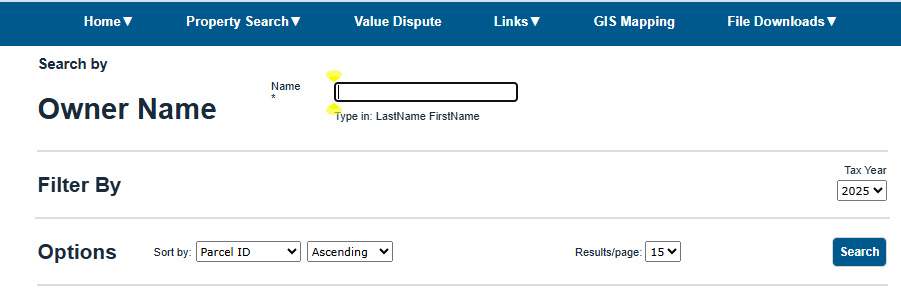
Enter Required Information
Based on your selected search type:
Owner Name: Type first and last name (avoid abbreviations)
Address: Enter house number and street name
Parcel Number: Enter the full parcel ID with no spaces
After typing the required details, click Search.
Review Your Results
The system displays a list of matching properties (if any). For each result, you’ll see:
- Owner name
- Property address
- Parcel ID
- Assessed value
- Tax details
View, Download, or Print Records
Once the full property record opens, you can:
- Scroll through ownership details
- Review tax valuation and history
- Use your browser’s Print or Save as PDF function to save a copy for personal or legal use
Montgomery County Auditor Office: Departments & Functions
The Montgomery County Auditor Office serves as a central hub for managing county finances, records, and property information. It provides essential administrative services to ensure transparency, accuracy, and efficiency in government operations. The office coordinates closely with other county departments, including the Clerk, Treasurer, and Recorder, to support smooth public service delivery.
Records Division
The Records Division manages official financial and property documents. This includes maintaining updated property records, transaction histories, and assessment documents. Residents and county staff rely on this division for accurate data used in legal, taxation, and administrative matters. The division also ensures that all records comply with public access policies, allowing residents to request or view documents as permitted by law.
Key functions include:
- Maintaining ownership and property records
- Processing document requests from the public
- Ensuring record accuracy and compliance with state regulations
Property Valuation Division
The Property Valuation Division evaluates real estate and other taxable properties within Montgomery County. Its work provides the foundation for fair taxation and revenue collection. By updating property values regularly, the division helps ensure that property owners are assessed equitably.
Main responsibilities:
- Determining property values for taxation purposes
- Reviewing and updating assessments annually
- Supporting taxpayers with valuation inquiries
Tax Assessment Support
The auditor’s office provides critical tax assessment support by coordinating with the Treasurer’s Office to confirm accurate billing and collection. This division ensures that property tax records are accurate and helps resolve discrepancies or disputes between taxpayers and the county.
Tasks include:
- Verifying property tax information
- Assisting with billing corrections and adjustments
- Providing guidance on property tax exemptions and relief programs
Public Access and Compliance
Transparency and public access are core priorities for the auditor’s office. Residents can access records online or request documents in person, while the office also ensures compliance with local and state regulations. Staff monitor adherence to laws governing public records and financial reporting, reinforcing accountability throughout Montgomery County government.
Highlights:
- Online search tools for property and tax records
- In-person assistance for document requests
- Compliance monitoring with legal and administrative standards
By organizing these divisions and services, the Montgomery County Auditor Office maintains accurate financial oversight, supports fair property taxation, and provides reliable access to public records. Collaboration with other county departments, such as the Clerk, Treasurer, and Recorder, strengthens overall government efficiency and public trust.
Montgomery County Auditor Public Records Available
The Montgomery County Auditor offers a wide range of public records to support transparency, accountability, and informed decision-making. These official records allow residents, property owners, researchers, and legal professionals to access accurate county information. From property details to financial reports, the auditor’s office ensures that all government documents are maintained securely and are available for public review online or in person. Accessing these records helps users stay informed about property ownership, valuations, and county finances.
What Public Records Are Available?
The auditor’s office organizes records into several categories to make searching straightforward and reliable. Users can view historical and current information, supporting transparency and public accountability in county operations. Each type of record serves a specific purpose, whether for taxation, property ownership, or financial oversight.
Available public records include:
- Property Ownership Records:
- Current and past property owners
- Parcel numbers, addresses, and legal descriptions
- Historical ownership changes
- Assessment and Valuation Reports:
- Annual property assessments and appraisals
- Market and taxable value of real estate
- Valuation history and adjustments
- Financial and Audit Reports:
- County budgets, revenue, and expenditures
- Audit findings and internal financial reviews
- Detailed fund allocation and spending records
- Historical County Data:
- Archived property ownership and taxation records
- Long-term assessment trends and maps
- Older audit and financial reports for research purposes
How to Access Records
Residents can access Montgomery County Auditor public records through the official online Records Search Tool, which simplifies property, tax, and financial record retrieval. Using the tool efficiently requires knowing which information to provide and selecting the correct record type.
Steps for a successful search:
- Open the https://www.mcrealestate.org/search/commonsearch.aspx?mode=owner
- Select your search type: Owner Name, Address, Parcel Number, or Advanced Search
- Enter the required information based on the search type
- Submit the query to view results in a detailed table
- Click individual records to see full property, assessment, or financial details
- Download or print reports as needed for reference
Tips to avoid common mistakes:
- Double-check spellings of names and addresses
- Use parcel numbers whenever available for precise results
- Select the correct record type before submitting your search
- Utilize filters for date ranges or report categories for faster results
Property Valuation Services in Montgomery County
Montgomery County property valuation services determine the real estate value of both residential and commercial properties for taxation and planning purposes. These valuations provide the foundation for fair taxation, budget planning, and property assessments. By maintaining accurate assessed values, the county ensures that property owners pay their fair share while supporting public services efficiently.
How Property Valuation Works
The property valuation process begins with the collection of property data, including size, location, improvements, and usage. County appraisers analyze this information and compare it with similar properties in the area to determine the assessed value. The auditor’s office uses standardized methods to ensure fairness, consistency, and compliance with Ohio state regulations.
Key steps include:
- Gathering property characteristics and legal descriptions
- Reviewing recent sales of comparable properties
- Applying standardized appraisal methods
- Finalizing an assessed value for taxation purposes
Factors Affecting Assessed Value
Several factors influence how a property’s real estate value is determined:
- Location: Neighborhood, proximity to schools, transportation, and amenities
- Property Size: Land area, square footage, and number of rooms
- Improvements: Renovations, additions, or new construction
- Market Trends: Local real estate sales, demand, and economic conditions
- Property Type: Residential and commercial properties are evaluated differently
Residential vs Commercial Property Valuation
Residential properties are typically assessed based on comparable sales in the surrounding area, property condition, and improvements. Commercial properties, on the other hand, require more complex analysis, often including income potential, zoning restrictions, and business usage.
Comparison:
| Factor | Residential | Commercial |
|---|---|---|
| Assessment Method | Market-based comparables | Income approach & market value |
| Complexity | Moderate | High |
| Updates | Annual | Annual or as required |
| Use in Taxation | Property tax calculation | Property tax & business reporting |
Frequency of Updates
Assessed values are updated regularly to reflect changes in market conditions, property improvements, or new constructions. Typically, property valuations are reviewed annually, but significant changes—such as renovations, subdivision, or zoning adjustments—can trigger interim reassessments. Regular updates help maintain equitable taxation across all properties in Montgomery County. By providing detailed property valuation services, the Montgomery County Auditor ensures that property taxes are fair, accurate, and reflective of real market conditions. Property owners can rely on these services for planning, compliance, and understanding their obligations.
Tax Assessment Role of the Montgomery County Auditor
The Montgomery County Auditor plays a crucial role in determining taxable value for all properties in Montgomery County. By conducting accurate tax assessments, the auditor ensures property taxes are fair and reflect the true value of each property. This process supports local government services and maintains equity among property owners.
Difference Between Tax Assessment and Tax Collection
Tax assessment and tax collection are often confused, but they serve distinct purposes. The auditor handles assessing property value to calculate taxes owed, while the Treasurer’s Office is responsible for collecting payments. Clear separation of duties ensures accountability and proper financial management within the county.
Key distinctions include:
- Tax Assessment: Determines property’s taxable value
- Tax Collection: Bills and collects the taxes from property owners
How Assessed Values Impact Taxes
The assessed value of a property directly affects how much a property owner owes in property taxes. Higher assessed values generally result in higher taxes, while lower values reduce tax liability. The auditor uses standardized methods to assign values fairly, considering property condition, improvements, and comparable market sales.
Factors influencing taxes include:
- Location and neighborhood of the property
- Property size and structure
- Recent renovations or additions
- Market conditions and trends
Review and Correction Processes
Property owners have the right to review and challenge their assessed values if they believe errors exist. The auditor’s office provides a formal process to ensure corrections are made when necessary, promoting fairness and transparency.
Review steps include:
- Access your property assessment online or in-person
- Verify property details and note any discrepancies
- Submit a correction request or appeal to the auditor
- Auditor’s office reviews the request and updates records as needed
Requesting Records In Person or by Mail
The Montgomery County Auditor allows residents and property owners to obtain official documents both in person and by mail. Understanding the procedures, requirements, and timelines ensures requests are processed efficiently.
Visiting the Auditor’s Office in Person
When visiting the Montgomery County Auditor office, residents can request property records, tax assessment documents, financial reports, and other official documents directly. Visiting the office allows staff to assist with locating and verifying records quickly.
- Office hours: Monday to Friday, 8:00 AM – 4:30 PM
- Bring valid identification (driver’s license or state ID)
- Staff assistance is available for record searches and verification
- Certified copies and historical records can be requested
Requesting Records by Mail
For residents unable to visit the office, requests can be submitted by mail. Submitting a complete and detailed request ensures faster processing and reduces errors.
- Include full name and contact information
- Specify the records requested (property address, parcel number, or document type)
- Attach a copy of identification
- Include payment for applicable fees
Faster Processing
Following best practices when submitting requests can reduce delays and ensure records are delivered accurately.
- Clearly specify which records are needed
- Include correct payment and any required forms
- Double-check identification and supporting documents
Montgomery County Auditor vs Other County Offices
The Montgomery County Auditor serves a distinct role within county government offices in Montgomery County, Ohio. While multiple offices handle aspects of property, taxes, and records, the auditor focuses specifically on assessing property values, maintaining financial records, and ensuring accurate taxation. Understanding how the auditor differs from other offices helps residents know where to go for specific services.
Comparison With Other County Offices
Each county office has unique responsibilities, and the auditor works in coordination with them to maintain efficient government operations.
Key distinctions include:
- Auditor:
- Determines assessed value of residential and commercial properties
- Maintains accurate financial and property records
- Supports tax assessment and public accountability
- Treasurer:
- Collects property taxes based on auditor assessments
- Handles payment processing and disbursement of funds
- Manages delinquent tax collections
- Clerk:
- Maintains court records and case filings
- Processes legal documents and official court records
- Assists the public with procedural questions
- Recorder:
- Records deeds, mortgages, liens, and other property-related documents
- Maintains an official archive of real estate transactions
- Ensures documents are legally valid and accessible
- Assessor (in some counties):
- May evaluate property value, but in Montgomery County, this responsibility is handled by the auditor
- Provides guidance for property appraisal questions
Auditor’s Unique Responsibilities
The Montgomery County Auditor’s unique responsibilities center on valuation and recordkeeping for tax purposes and public accountability. Unlike the Treasurer or Clerk, the auditor does not collect payments or manage court documents. Similarly, while the Recorder handles deeds and legal filings, the auditor ensures assessed values reflect current market conditions and are applied equitably across all properties.
Location and Jurisdiction of the Montgomery County Auditor
The Montgomery County Auditor serves as an official local government office for Montgomery County, Ohio. This page focuses specifically on Montgomery County, Ohio, where the county seat is Dayton, OH. The auditor’s responsibilities apply only within this county’s boundaries. Understanding the auditor’s location and area of service helps residents find the correct office for public records, property valuation, and tax assessment.
Physical Location of the Auditor Office
The Montgomery County Auditor Office is centrally located in downtown Dayton, making it accessible for residents and visitors. The office handles in-person requests for property valuation, public records, and tax assessment inquiries.
Official contact details:
- Address: 451 West Third Street, Dayton, OH 45422
- Mailing Address: P.O. Box 972, Dayton, OH 45422
- Phone: (937) 225‑4326
- Fax: (937) 496‑7690
- Email: auditor@mcohio.org
- Website: https://www.mcohio.org/565/About-Us
Office Hours:
- Monday – Friday: 8:00 am – 5:00 pm
- Closed: Weekends and county holidays
Frequently Asked Questions
The Montgomery County Auditor provides essential services related to property valuation, tax assessment, and public records in Montgomery County, Ohio. Residents, property owners, and taxpayers often have questions about how the office works, what records are available, and how property values are determined. The following FAQs answer common concerns and guide users on how to access services effectively.
Is the Auditor the Same as an Assessor?
No, the Montgomery County Auditor is not the same as an assessor. In Montgomery County, the auditor is responsible for evaluating property values, maintaining financial and property records, and determining taxable values. Unlike some counties where a separate assessor handles valuations, the auditor in Montgomery County oversees this process, ensuring accurate, fair, and consistent property assessments. This includes residential, commercial, and industrial properties. The auditor also provides transparency through public records, allowing property owners to review assessment data online or in person.
Are Public Records Free?
Many public records maintained by the auditor are available at no cost online, including property ownership information, assessed values, and some historical records. Residents can use the Montgomery County Auditor Records Search Tool to view these records quickly by entering an address, parcel number, or owner name. While online access is free, some services—like certified copies, printed documents, or detailed reports—may involve a small administrative fee. This ensures official documents meet legal standards for formal use, such as for legal proceedings, mortgage transactions, or title verification.
How Often Are Property Values Updated?
Property values in Montgomery County are generally reviewed and updated annually to reflect current market conditions, new construction, property improvements, or zoning changes. For example, if a homeowner adds a new room or a commercial building undergoes renovation, the assessed value may be adjusted to reflect these improvements. Annual updates help ensure property owners pay fair taxes based on accurate valuations. Interim assessments may also occur for significant changes to a property. Residents can access their latest assessed values online or contact the auditor’s office for clarification.
Can I Appeal a Property Valuation?
Yes, property owners have the right to appeal an assessed value if they believe it does not accurately reflect the property’s market value or condition. The process involves reviewing the property details, gathering evidence such as recent sales or appraisals, and submitting a formal appeal to the auditor’s office. The office evaluates each case, makes adjustments if warranted, and updates records accordingly. This process protects property owners from over-assessment and ensures taxation remains fair and consistent across all county properties.
How Do I Access Records Online?
Residents can access property records, tax information, and valuation data using the Montgomery County Auditor Records Search Tool. The tool allows searches by owner name, property address, or parcel number, providing results such as assessed value, property description, and tax history. Users can also view historical records and download or print documents. For official, certified copies required for legal or financial purposes, residents may contact the auditor’s office directly. This online access saves time, increases transparency, and helps property owners make informed decisions regarding taxes or property transactions.